Two-Coat System on Warehouse Steel
Primed rust, sealed screws, and a white finish over the main warehouse roof.
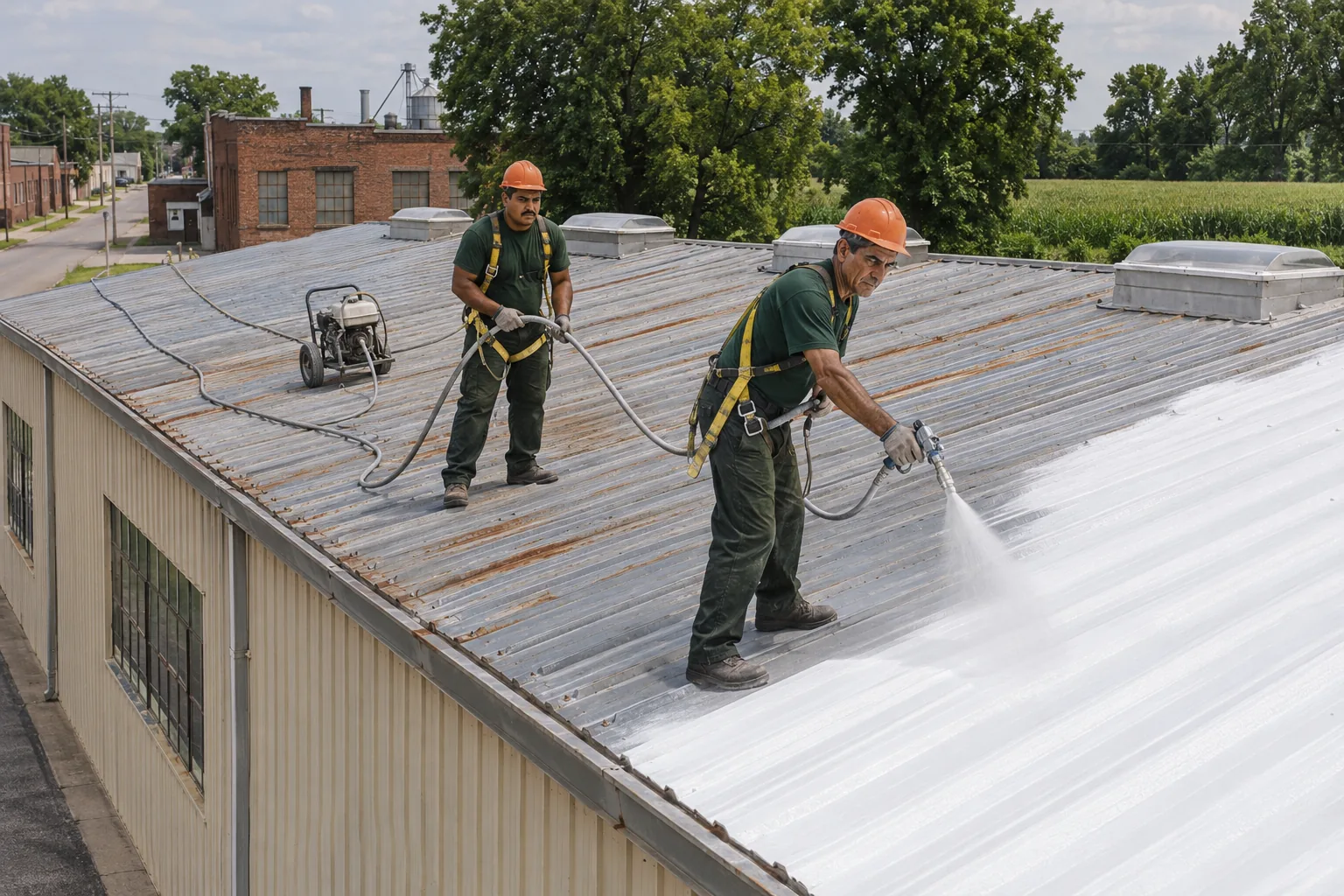
As a Gas City metal roof coating contractor, we coat warehouse and shop roofs in sections, planned around your docks, trailers, and delivery windows.
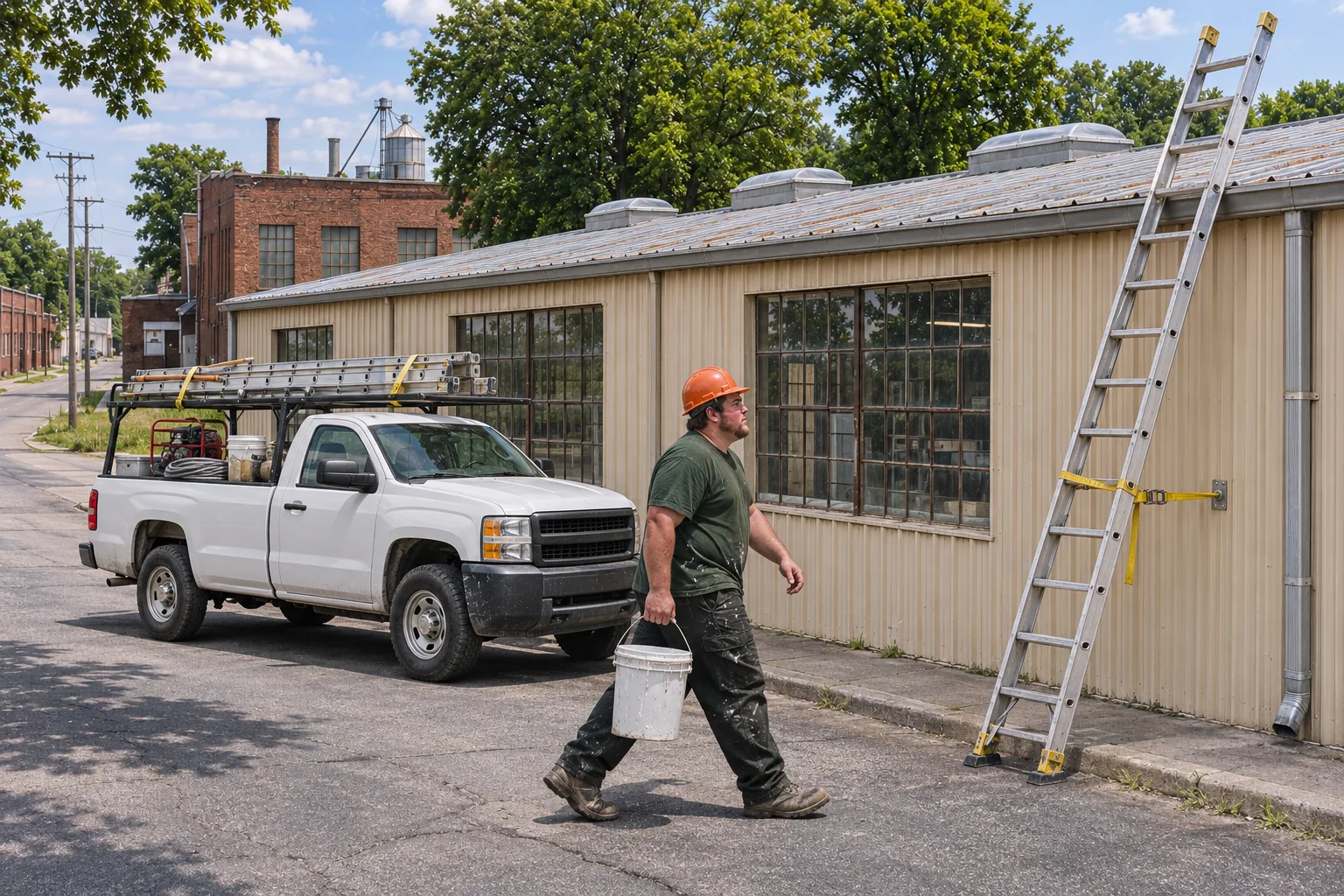
Gas City metal roof coating on a warehouse has to work around trucks. We map the roof into sections, then match each one to the docks and aisles below it so loading keeps going.
Lifts, pails, and the spray rig sit at the far end of the lot, away from trailer swings. When spraying near the docks, wind screens and covers protect trailers and parked cars.
Big warehouse roofs leak in predictable places. These are the three we chase most in Gas City.
Drips over racking along a back wall often come from the gutter line at that eave.
Long gutters split at their seams, which are cleaned, sealed, and coated with the roof edge.
Water at a dock door usually starts where the dock canopy meets the wall.
Flashing at the canopy joint is resealed and reinforced before the coating.
A drip under a skylight comes from a rusted curb or a cracked panel above it.
Curbs are treated, sealed with fabric, and coated up the sides.
Puddles in the middle of the floor often drop from a valley between two roof sections.
Valleys where roof sections meet hold water, so they get extra seam prep and silicone over the low line.
For a busy warehouse, coating the roof brings these gains.
Each section is coated while freight keeps moving below.
Long gutter runs get their seams sealed with the roof edge.
Curbs get fabric and coating where rust let water in.
A white roof reflects summer sun off the storage space.
Equipment staged at the lot edge leaves trailer paths open.
Low valleys between sections get silicone and extra seam prep.
Every finished section gets photos and thickness readings.
The panels stay in place, so scrap stays away from the docks.
Gas City warehouses mostly carry low-pitch steel. Flat offices and shingled fronts get their own systems.
Primed rust, sealed screws, and a white finish over the main warehouse roof.
Low areas between roof sections, where water stands, take silicone.
Small shops with fast-draining steel take acrylic over primer.
Office areas that leak and lose heat can take spray foam with a topcoat.
Flat, intact shingles on front offices take a shingle-rated coating.
Wet pallets cost more than a roof walk. Call and we will find the gutter, curb, or flashing letting water in.
Phone: (463) 466-9855
Every step is tied to the dock schedule, so freight and roof work stay out of each other's way.
We walk the full roof, mark gutters, curbs, and laps, and note which docks sit under each area.
Sections are scheduled around the dock hours and delivery windows you give us.
Lifts and pails go at the edge of the lot, clear of trailer paths and turns.
Panels are washed and primed, and gutters, curbs, and laps are sealed with fabric.
Coats go on behind wind screens near docks, with readings taken section by section.
We cover Gas City along with Muncie and the towns listed below. Outside that area? call us or send us a message.
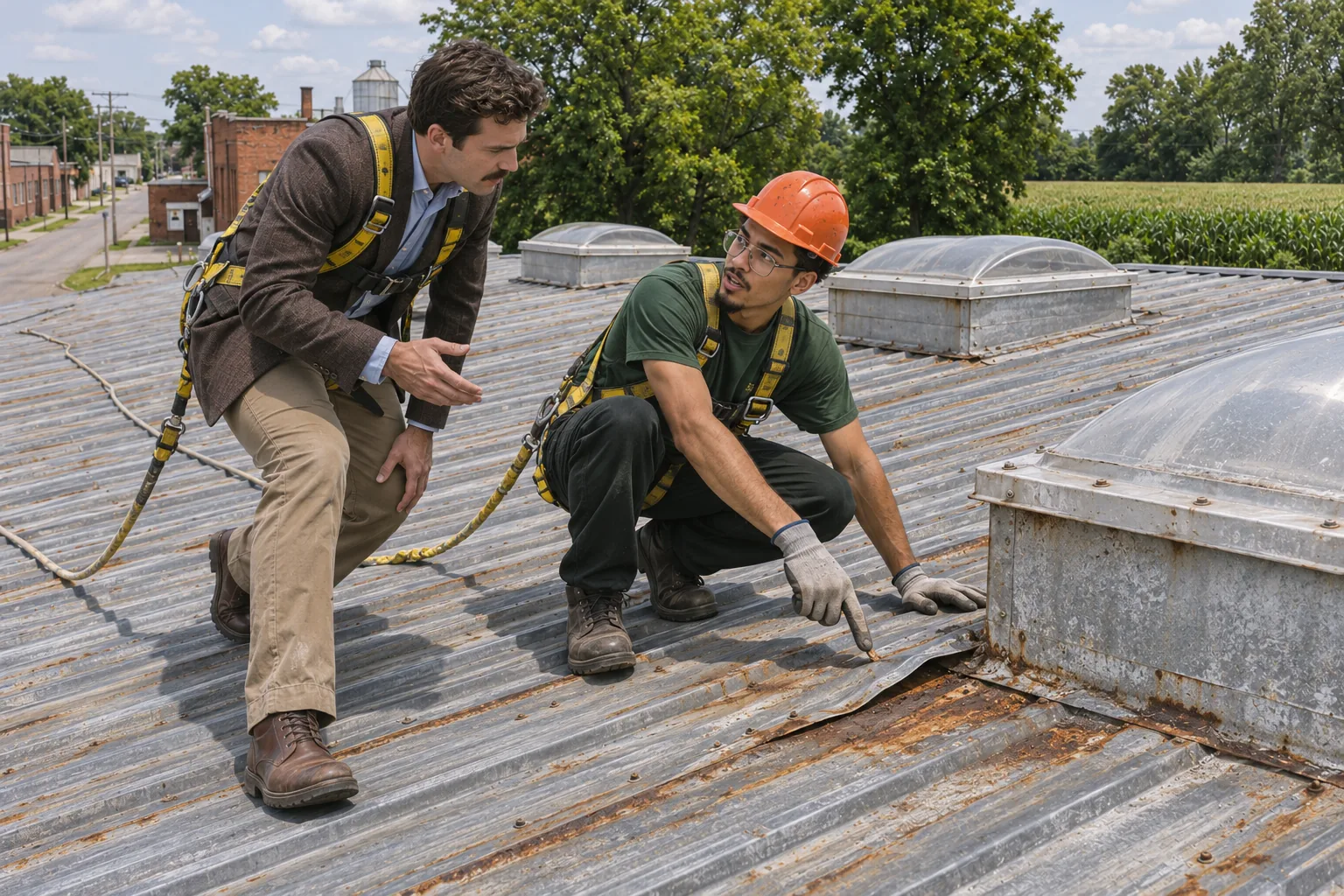
Plants, warehouses, and offices across our home city
Plant roofs coated in sections around shift work
Shops and offices that stay open during the work
Farm shops and ag buildings with exposed screws
Hail checks on panels before any coating goes on
What warehouse and shop owners ask before the work starts.
Yes, warehouses, shops, and other commercial buildings in Gas City. We plan the work in sections around deliveries, then wash, treat rust, seal seams and screws, and apply the coating. You get a written scope of the prep and coating before the first section starts.
Our published range is about $2.50 to $4.00 per square foot to coat and about $5 to $8 to replace. Large open warehouse roofs tend to sit lower in that range, while long gutter runs, many skylights, and tight dock schedules push the price up.
Yes. Small shops get the same inspection and prep as a large warehouse. A short roof walk shows whether the panels are ready to coat or need screw and lap work first.
Equipment stays at the far edge of the lot, the roof is worked in sections above docks that are idle, and screens go up when spraying near trailers. Your dock manager gets the schedule before each section.
Yes. Skylight panels that are intact stay, while the curbs around them get treated and sealed. Cracked panels are replaced before the coating so the curb seal has something solid to meet.
Yes. Canopies over docks are often their own small metal roofs, with flashing where they meet the wall. They get the same washing, sealing, and coating, and the canopy-to-wall joint gets extra fabric because it leaks so often.
Yes. The work happens on top, so racks and stock stay where they are. If a known leak is dripping on product, covering or moving that one bay until it is sealed is the only change inside.
We start where leaks are worst and where docks are least busy, then work outward. The order is set with your dock manager and adjusted if weather or freight changes a day.
We ask for those spots to be cleared while that edge is sprayed. When a trailer has to stay, it gets covered, and wind screens go up along the roof edge.
Get a ballpark coating range now, then call to plan the work around your dock schedule.