Silicone Over Low-Slope Metal
Washed panels, primed rust, and sealed screws, then silicone sprayed thick enough to bridge the laps.
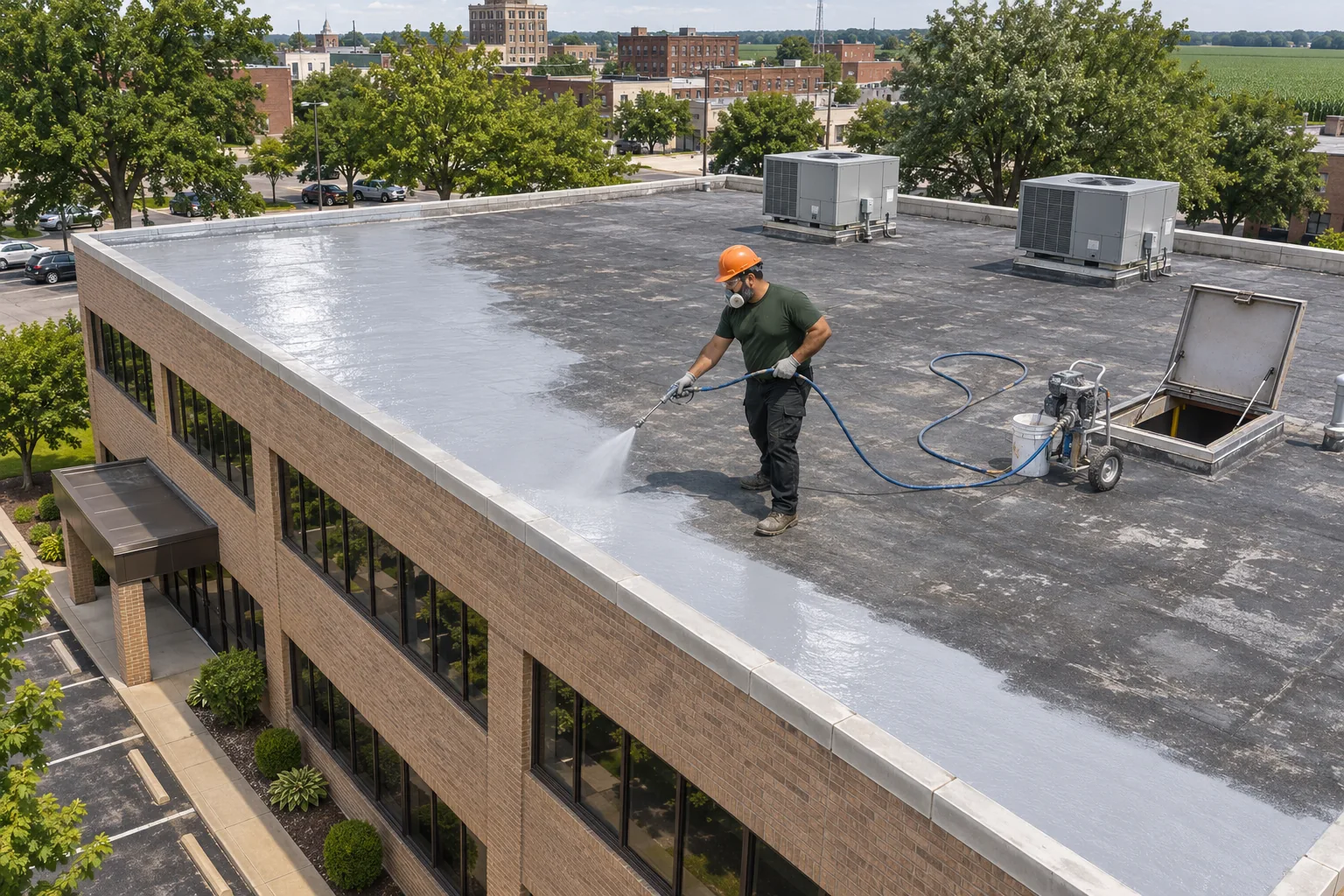
As a Muncie silicone roof coating contractor, we spray silicone over low-slope metal, single-ply, and older coated roofs where water lingers after storms.
A Muncie silicone roof coating fits flat and low-slope roofs with ponding, as long as the roof underneath is dry and holding together.
| Check | Good For Silicone | Handle First |
|---|---|---|
| Slope | Flat to low slope | Steep pitches that shed water fast (acrylic fits better) |
| Ponding | Shallow water near drains | Deep ponds from a sagging deck |
| Roof surface | Metal, TPO, EPDM, built-up, or old coatings | Loose gravel or blistered asphalt |
| Insulation | Dry meter readings | Wet boards under the ponding areas |
| Seams | Tight laps that clean up | Split seams and open flashing |
| Future recoats | Silicone again | Plans to switch to acrylic later |
Water that sits for days is hard on any roof. These are the signs that send Muncie owners looking at silicone.
Drips that show up after a long wet stretch point to water sitting long enough to work into a seam.
Shallow ponds around drains and low corners soften water-based coatings. Silicone keeps its grip under that water.
A ring that grows over weeks usually sits under a pond, where the old roof surface has cracked through.
Cracked, alligatored coating under the pond is cleaned, primed where needed, and covered by the new silicone layer.
Upper offices that run warm in July sit under a dark roof that bakes in the afternoon sun.
A bright silicone surface reflects much of that sun, though dirt dulls it over time and a wash brings it back.
Odor near rooftop units can mean water is getting into the roof around the curb flashing.
Curb seams are sealed and reinforced with fabric before silicone goes up the curb sides.
Silicone goes over several roof types. Each one gets its own prep before the silicone layer.
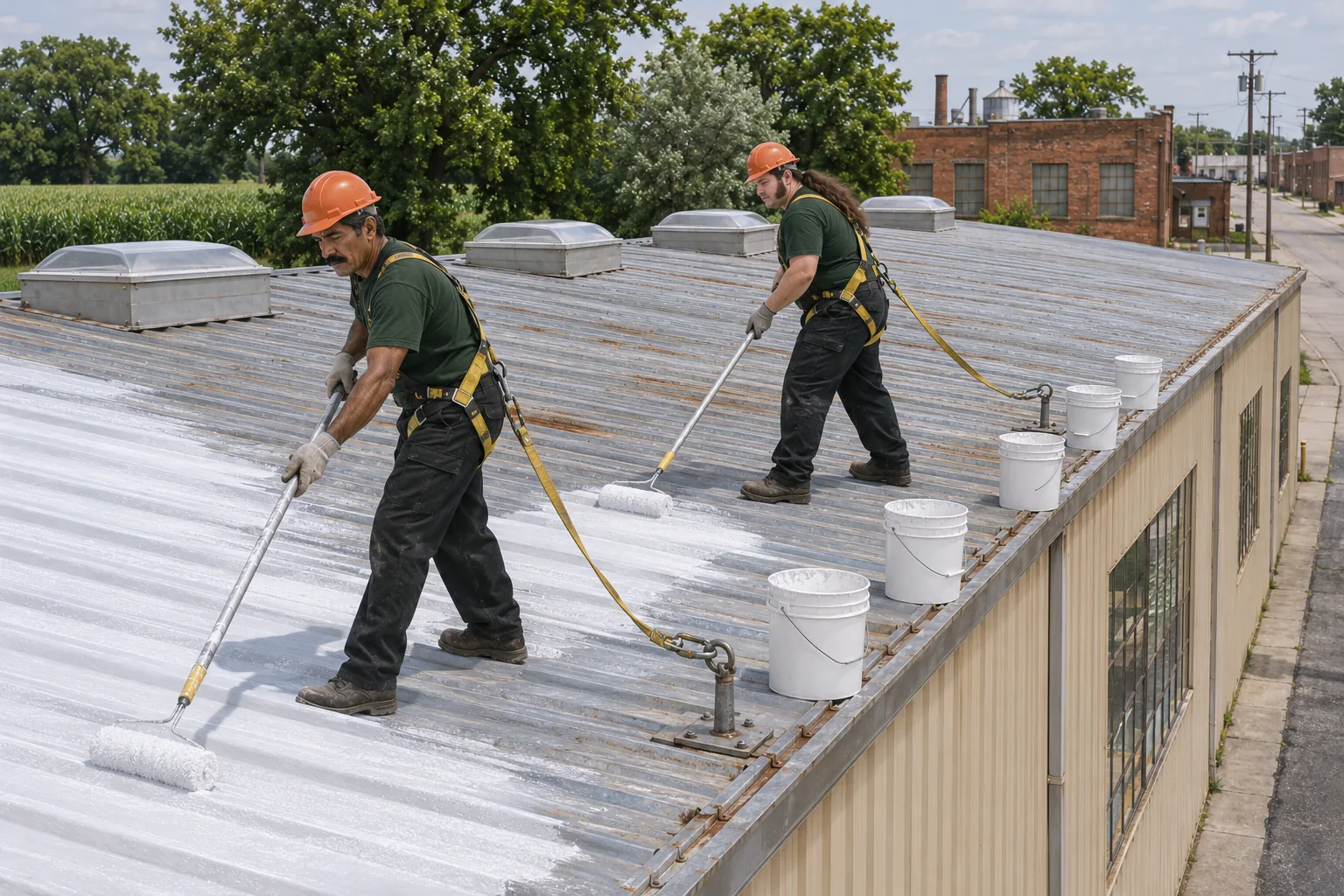
Washed panels, primed rust, and sealed screws, then silicone sprayed thick enough to bridge the laps.
Single-ply sheets are cleaned and primed for adhesion, and seams get reinforced before the coating.
Smooth asphalt roofs are cleaned and spot-primed where oils bleed through, then coated.
An existing coating that still grips is washed and tested, then recoated with silicone.
Silicone changes how a low-slope roof handles standing water, sun, and the next recoat.
Silicone stays bonded under water that sits near drains after heavy rain.
A light finish reflects afternoon sun away from the upper floors.
Future coats go on after a wash, with nothing torn off.
Laps, screws, and small cracks end up under one unbroken membrane.
Ponds that outlast the storm are where silicone pays off. Answer seven questions for a ballpark coating range on your roof.
Silicone goes on in one or two passes, but the steps before it decide how well it holds.
We map ponding areas, meter the insulation under them, and check seams, drains, and curbs for openings.
A pressure wash lifts dirt and chalk, and the roof dries fully before anything else goes on.
Rust, asphalt bleed spots, and single-ply sheets get the primer they need, and seams get fabric.
Most roofs reach the specified thickness in one or two passes, with extra material over seams and screws.
Wet film readings during the spray confirm coverage, and photos of the finished roof go in your file.
Some roofs drain too well to need silicone, and some need insulation. These options cover them.
Sloped roofs that drain within hours take water-based acrylic, which recoats easily and costs less per gallon.
Acrylic coating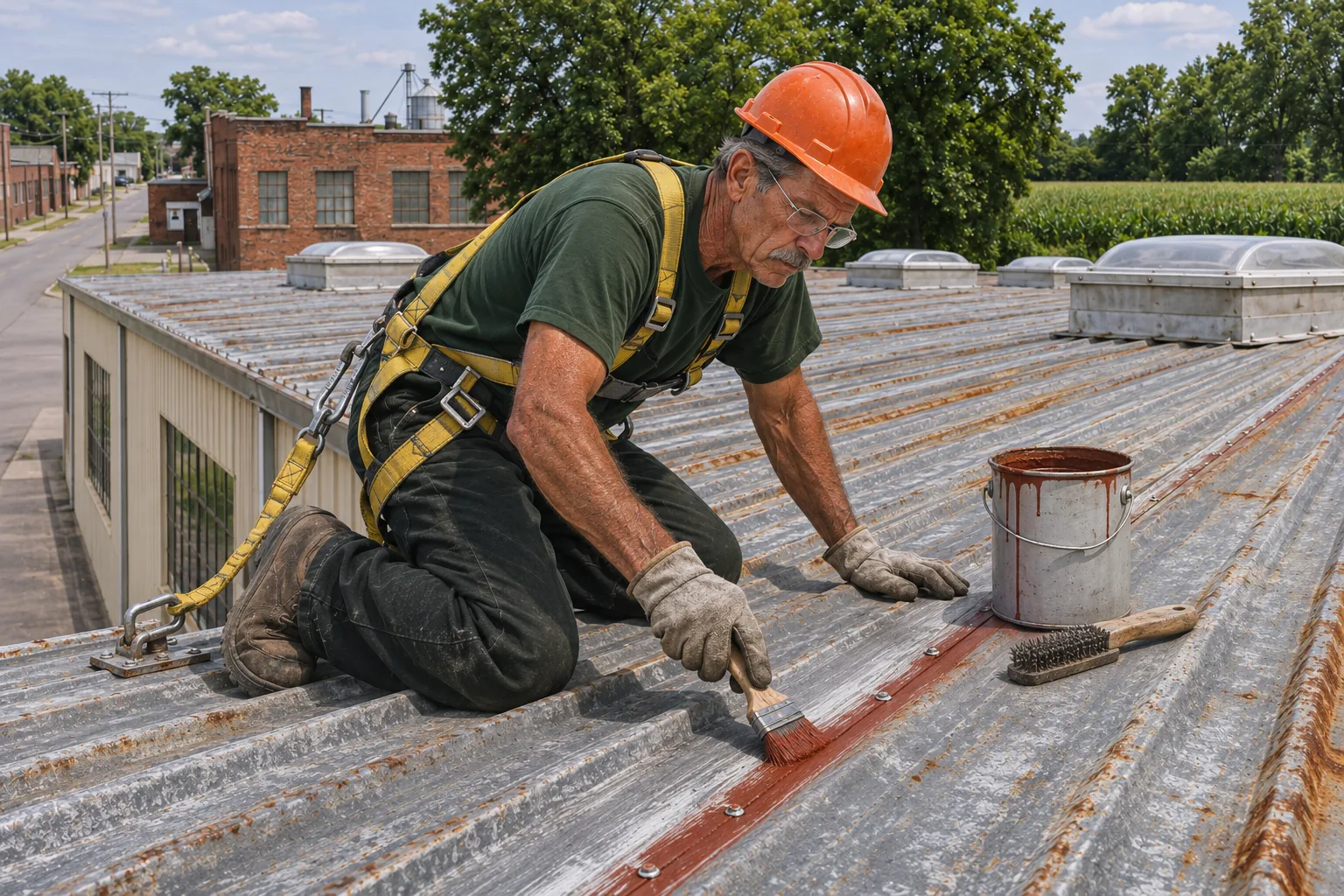
Steel roofs with heavy rust and loose screws start with the full panel prep described on our commercial metal page.
Commercial metal roof coating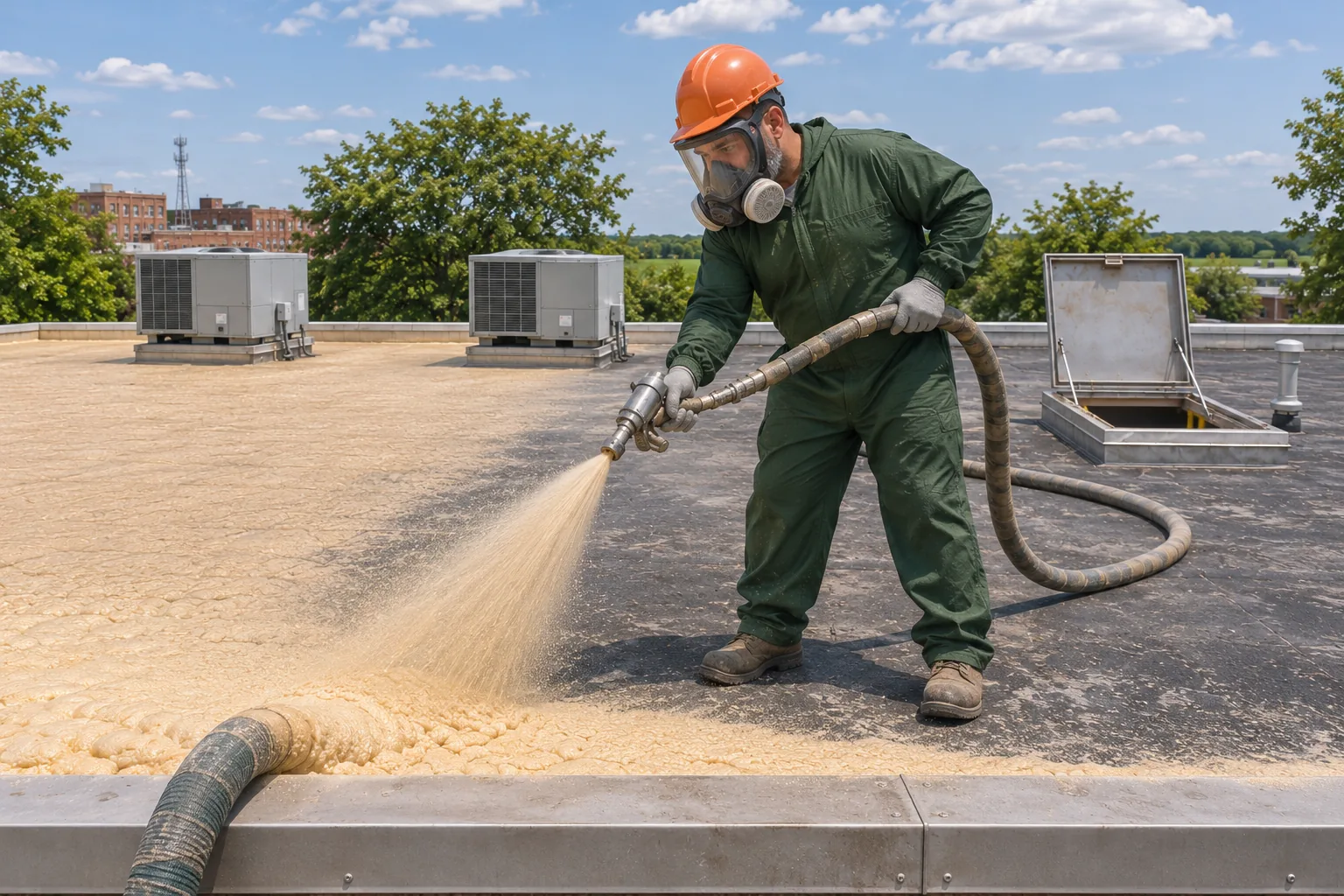
Flat roofs that leak and lose heat can take spray foam with a silicone topcoat over it.
Spray foam roofingWhat owners ask most before choosing silicone.
Often it can, at lower temperatures than acrylic allows. The roof has to be dry and free of frost and dew, so late fall and early spring work in Muncie hinges on that day's surface temperature and the overnight low. We follow the maker's temperature and dew point limits and stop when moisture is coming.
Silicone picks up dirt, which dulls its reflectivity, and it gets slick when wet. Few other coatings stick to it, so the next recoat is usually silicone too. It also costs more per gallon than acrylic. Owners with water sitting in low spots still choose it because it resists ponding well.
It comes down to the target dry film thickness for the product. Many systems reach it in one or two coats, plus extra at seams and screws. We take wet film readings as we spray, and rough or deeply ribbed panels take more material to reach the same thickness.
Silicone falls inside our published coating range of about $2.50 to $4.00 per square foot, compared with about $5 to $8 to replace. The final price comes after a roof walk. Thickness, seam and screw prep, rust treatment, rooftop units, and access around storefronts all change the total.
Some roofs need one and some skip it. Clean metal and many old coatings take silicone directly, while rusted steel, asphalt that bleeds, and some single-ply sheets get a primer first. We run adhesion tests on small patches to decide before the whole roof is coated.
The water comes off first. Ponds are pushed off and the low spots dried before coating, and any wet insulation under them is replaced. Once the roof is dry, silicone goes on thick in those spots so it handles the ponding that returns after rain.
Tell us where the water sits and how big the roof is. A ballpark range comes back right away, and a roof walk follows when you call.