Foam Over Metal Panels
Steel is cleaned and primed, then foam fills the ribs and covers screws before the topcoat.
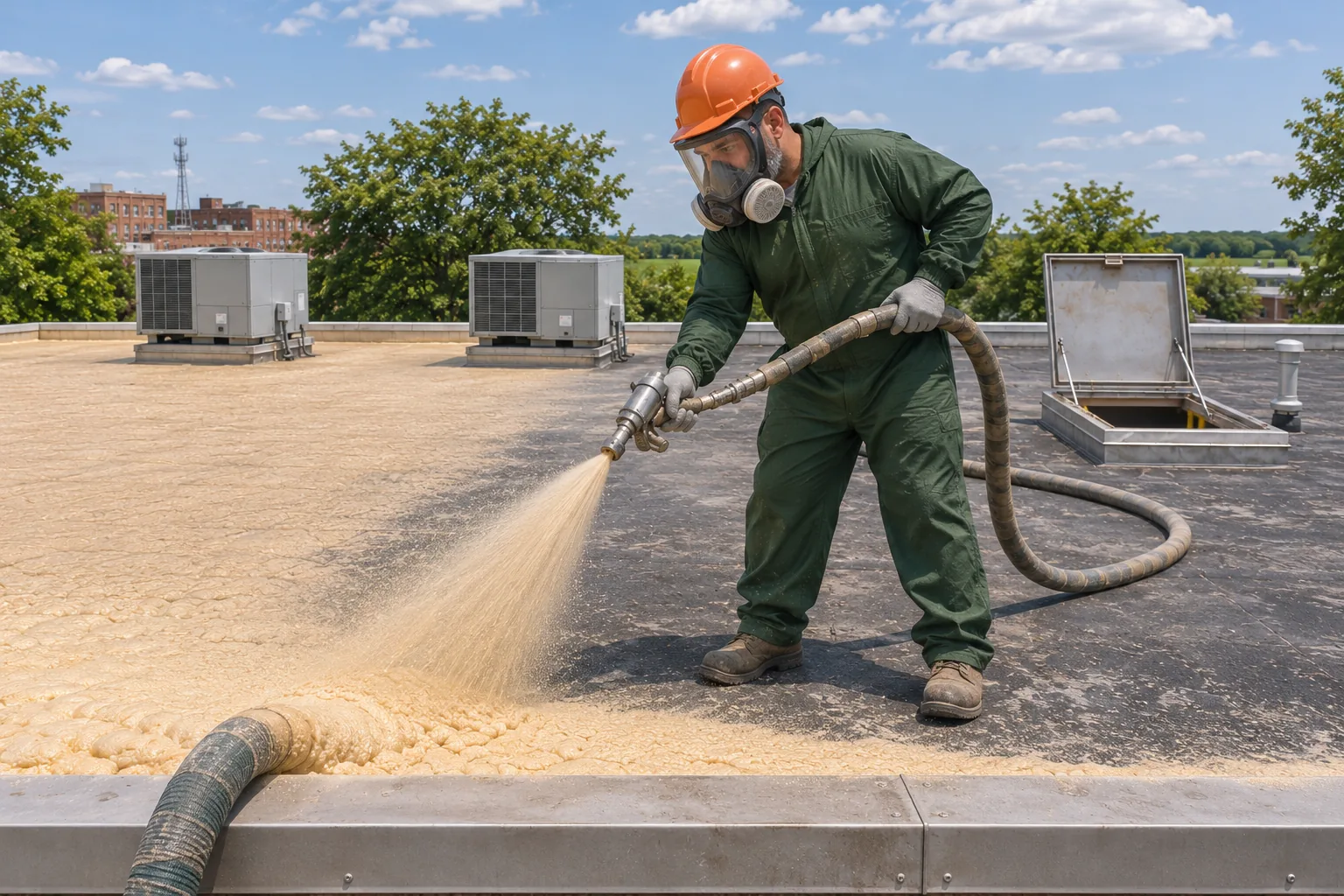
As a Muncie spray foam roofing contractor, we spray foam over leaky metal and flat roofs, then cover it with a protective coating the same week.
Muncie spray foam roofing works over most metal and flat roofs, as long as the surface is dry and solid. Here is how we sort a roof.
| Check | Ready For Foam | Fix First |
|---|---|---|
| Existing roof | Metal, built-up, or single-ply | Saturated or rotted deck |
| Moisture | Dry meter readings | Wet insulation to remove |
| Panels | Firm steel with surface rust | Rust-through holes and loose panels |
| Curbs and pipes | Many penetrations to seal | Failed curbs to rebuild first |
| Neighbors | Room to control overspray | Cars or air intakes with no shielding plan |
| Weather | Dry days with light wind | Rain, dew, or gusty afternoons |
Foam answers two problems at once: leaks at hundreds of joints and heat lost through a thin roof.
When drips show up all over after a storm, the roof has too many open joints to chase one at a time.
Foam covers every screw head, lap, and seam in one layer, so each joint stops being its own leak point.
Shops that never warm up are losing heat through a roof with thin or crushed insulation.
A foam layer adds insulation on top of the existing roof, which stays in place.
Frost or drips inside on cold mornings often come from condensation rather than a leak.
We meter the roof first, because foam needs a dry surface and condensation needs its own fix inside.
Water near air handlers usually starts at curb flashing that has pulled away from the curb.
Foam builds up around curbs and pipe boots, closing gaps that sheet flashing struggles to cover.
Foam roofs differ in the substrate under them and the coating on top. These are the builds we install.
Steel is cleaned and primed, then foam fills the ribs and covers screws before the topcoat.
A dry built-up roof is cleaned and foamed in place, which skips a tear-off.
Silicone over foam suits roofs with low spots that hold water after rain.
Acrylic over foam fits sloped areas that drain fast and get recoated on a schedule.
Foam with a topcoat changes how the whole roof handles water and heat.
Seams, laps, and screw heads all end up under the same foam.
Foam slows heat loss in winter and heat gain in summer.
The existing roof stays in place under the foam, which cuts tear-off waste.
A fresh topcoat on schedule keeps sun and water off the foam.
Foam closes the joints and adds insulation in one job. Answer seven quick questions for a ballpark range on your roof.
Foam is sprayed fast, but the job is planned around moisture, wind, and neighbors.
We meter the roof for moisture, check panels and curbs, and walk the edges to plan overspray protection.
Rusted-through panels, failed curbs, and loose flashing are fixed, and the surface gets cleaned and primed.
Air intakes are closed off, and nearby cars and walls get covering so overspray stays on the roof.
Foam goes on in passes to the planned thickness, building up around curbs and pipes.
A silicone or acrylic coating covers the foam before sunlight starts to break it down.
Every foam roof needs a topcoat, and some roofs only need the coating.
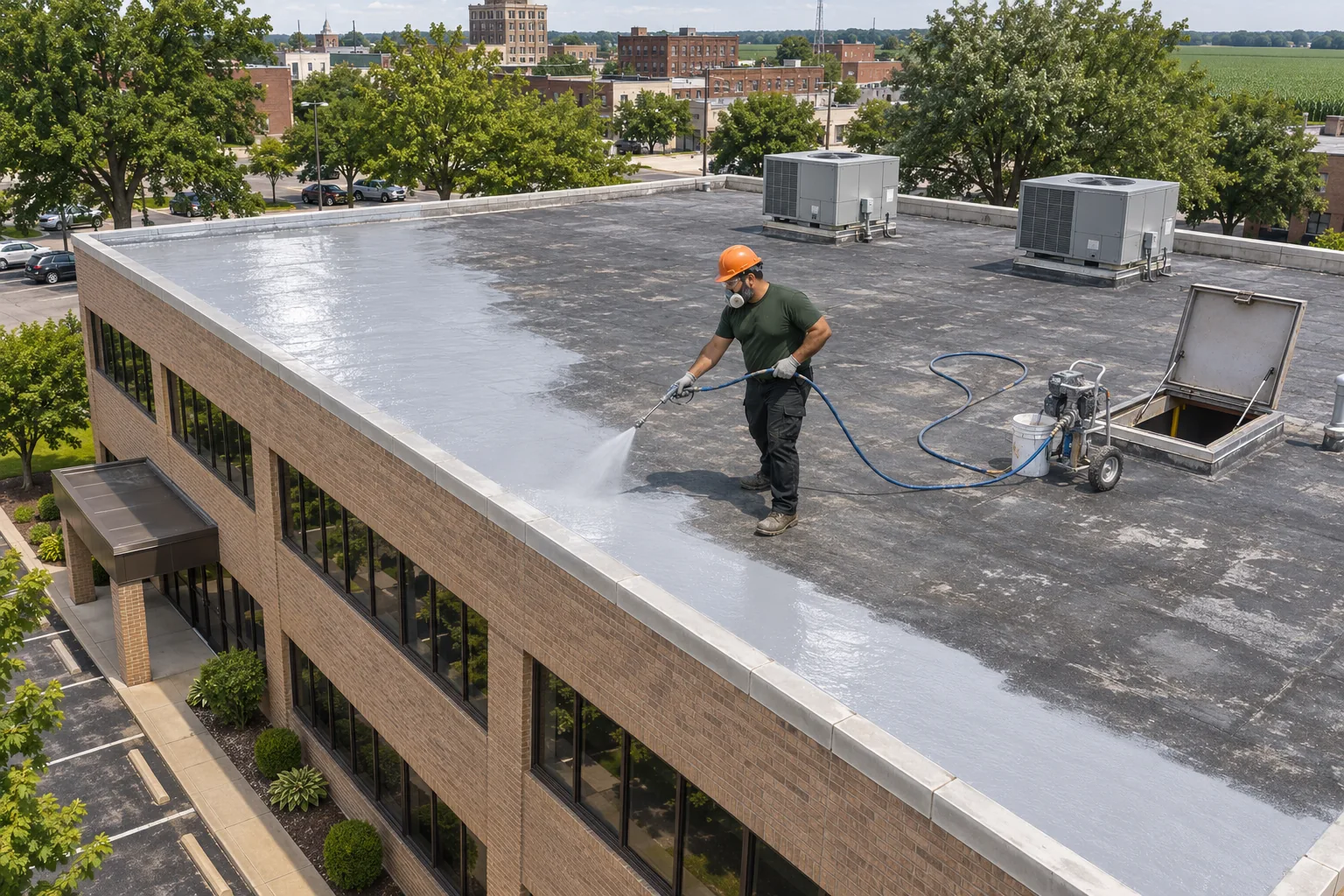
Silicone is the usual topcoat where foam sits on low spots that hold water after storms.
Silicone coating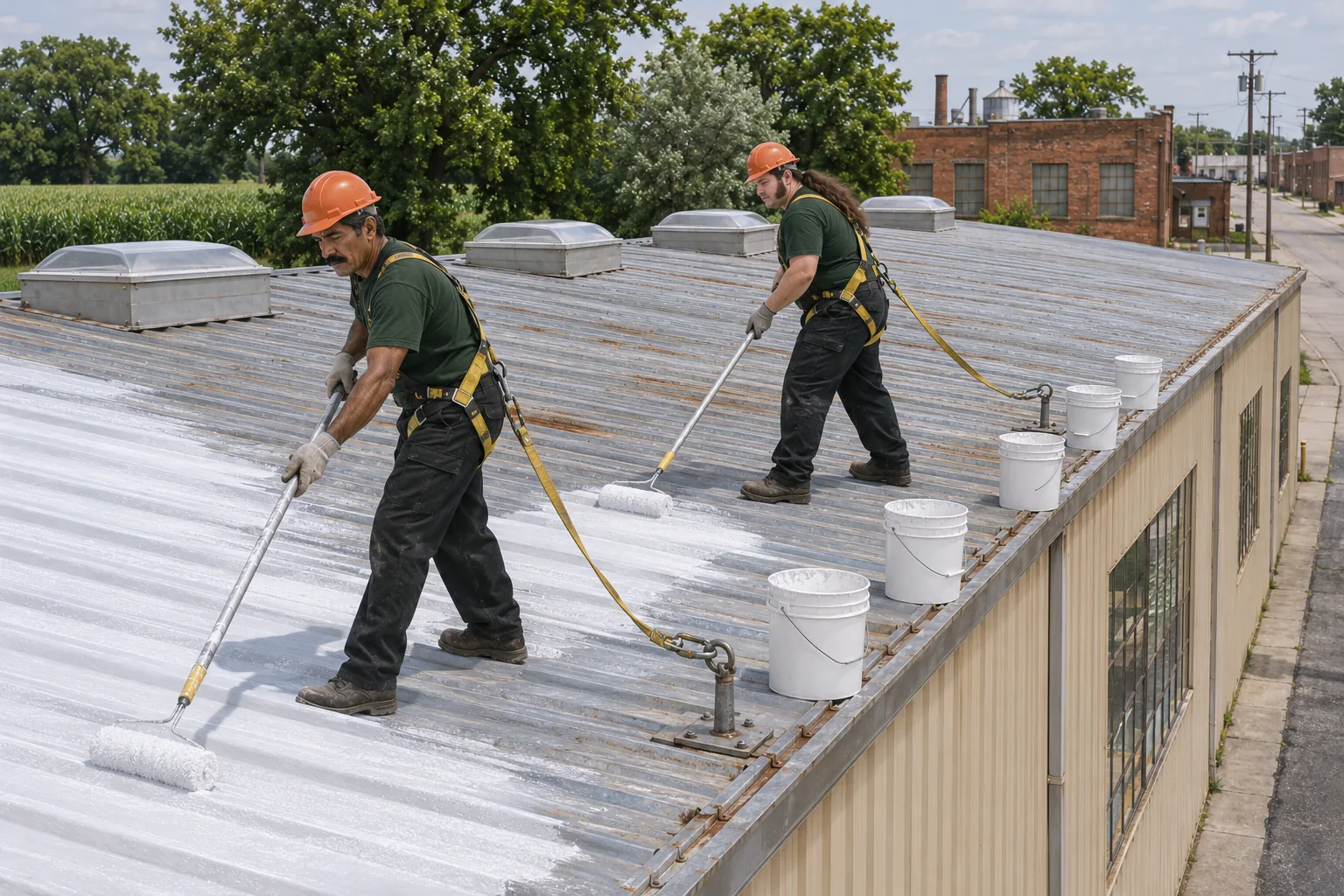
Sloped foam roofs that drain well can take acrylic, which recoats easily later.
Acrylic coating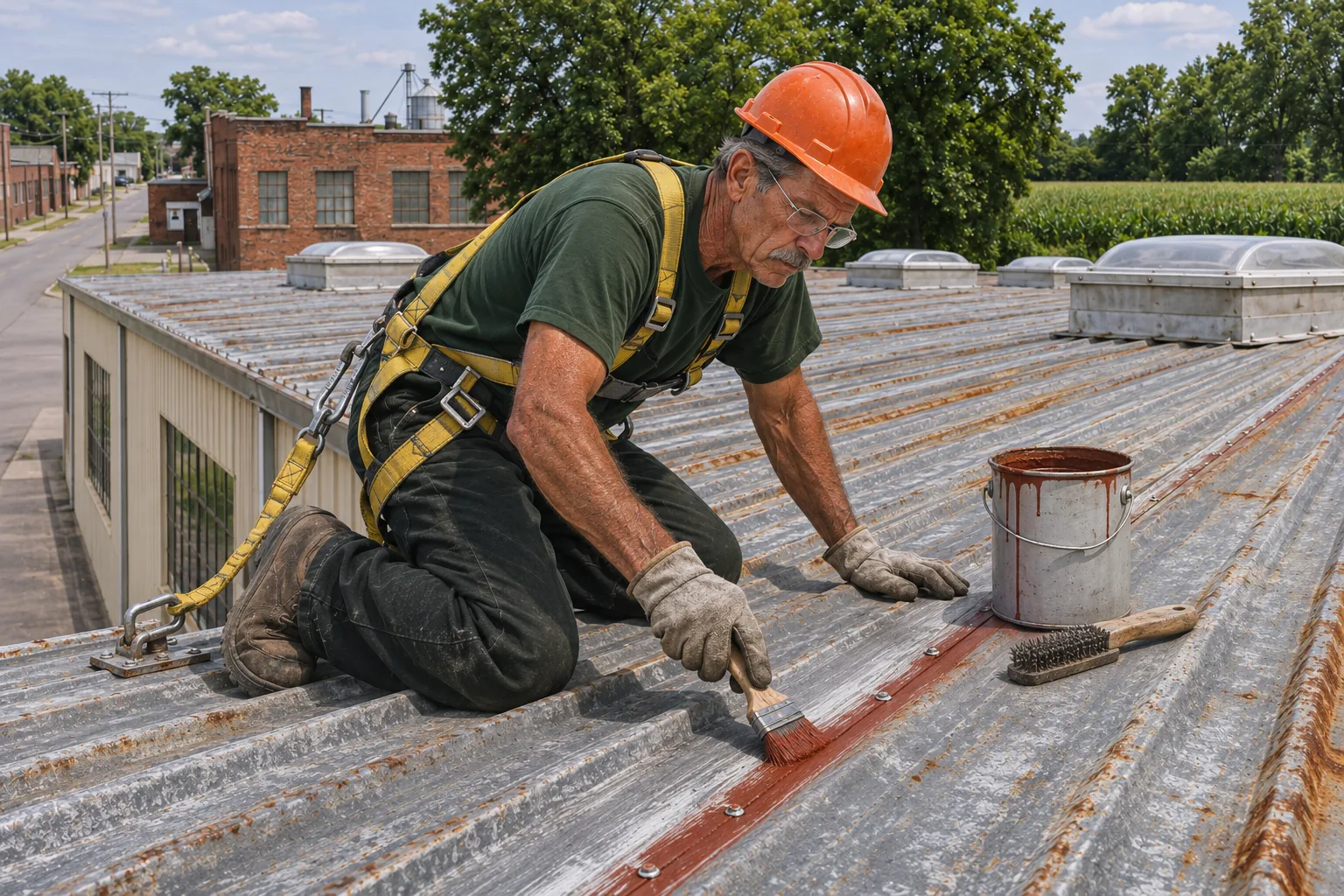
Roofs that only need sealing and a new finish can skip foam and take a coating over the prepped steel.
Commercial metal roof coatingWhat owners ask before choosing foam.
Yes. Foam puts continuous insulation over the whole roof and closes gaps at seams and screws, which slows heat loss through a Muncie winter. How much it helps rides on the foam thickness and the insulation already there. We size the foam to how the building is used and cover it with a protective coating.
In most cases, yes, because it covers seams, laps, and screws in one continuous layer. On older steel roofs we first repair rusted-through panels, failed curbs, and loose flashing, since foam needs a solid, dry surface. Condensation inside the building is a separate problem that foam on top only partly addresses.
Its life rides mostly on the protective topcoat. With inspections and recoats on schedule, foam roofs are often kept in service for 20 years or more. Hail dings, foot traffic, and any spot where bare foam shows should be fixed quickly so sun and water leave the foam alone.
Foam is priced after a roof walk. For reference, our published range is about $2.50 to $4.00 per square foot for coating systems and about $5 to $8 for replacement. Foam thickness, panel prep, rust repair, and the number of rooftop units are the things that move a Muncie price.
Snow melting on the roof refreezes at colder gutters and eaves, ice blocks the outlet, and meltwater backs up under panel ends and laps. In Muncie, those leaks tend to show along the eaves in late winter. Sealed end laps and screws, clear gutters, and tight gutter seams leave that water fewer ways in.
Foam thickness is set by the insulation the building needs and the shape of the roof. It is built up more around curbs and low spots to move water toward drains. The plan lists the thickness by area, and we check it with a probe as we spray.
Tell us the roof type, its size, and where it leaks. A ballpark range comes back right away, and we set up a roof walk when you call.