Acrylic System on Sloped Panels
Water-based acrylic over a rust primer fits pitched steel that drains fast. It recoats easily and goes on in warm, dry weather.
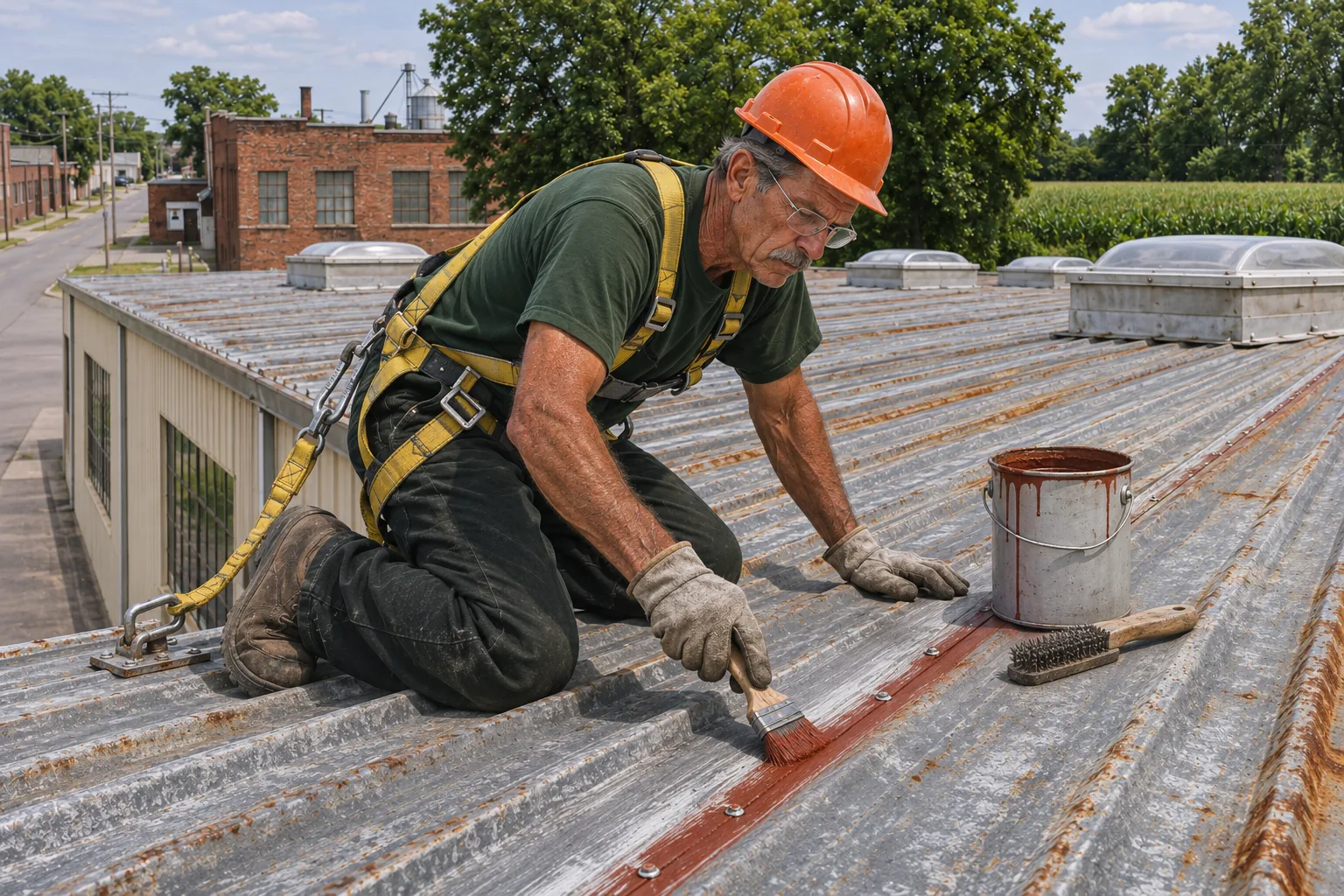
As a Muncie commercial metal roof coating contractor, we treat rust, seal screws and laps, and coat steel roofs on plants, warehouses, and shops.
Muncie commercial metal roof coating works when the steel is solid and the trouble sits in the screws, laps, and finish. Use this table to sort your roof.
| Check | Coat It | Repair Or Replace First |
|---|---|---|
| Panel steel | Surface rust and chalky paint | Rust holes or steel thin enough to flex underfoot |
| Screw lines | Loose or leaking screws | Stripped holes across whole panel runs |
| Side and end laps | Small gaps and dried sealant | Torn laps or panels sliding at the eave |
| Skylights and curbs | Rust at the curb base | Cracked skylight panels or rotted curbs |
| Insulation | Dry meter readings | Wet or crushed insulation under the panels |
| Hail marks | Dents with the paint intact | Punctures, split seams, or cracked panels |
Each sign inside the building ties to a detail on the steel above it. These four account for most calls on Muncie metal buildings.
A leak that keeps returning to one bay usually sits at a skylight curb or end lap straight upslope of the wet spot.
Curb bases rust where water collects behind them. We treat the steel, seal the flange with fabric, and coat up the curb sides.
Rings that grow a little after each storm point to screws whose rubber washers have dried out and split in the sun.
Washers shrink and crack after years of heat. Screws get new washers or a size-up, and each head is sealed before coating.
Water landing on a production line often starts at an end lap, where rain runs downslope under the panel above.
End laps carry the most water on a long panel run, so they are cleaned, sealed with seam sealer, and covered with fabric.
Fresh leaks after hail mean something was punctured or split. Dents alone seldom leak; holes and opened seams do.
We document storm damage with photos, repair punctures and seams, and coat once the panels are tight again.
Steel roofs in Muncie take one of four coating builds. Slope, ponding, and your recoat plan decide which one.
Water-based acrylic over a rust primer fits pitched steel that drains fast. It recoats easily and goes on in warm, dry weather.
Silicone over cleaned panels handles low spots near gutters and valleys. Later recoats stay silicone, so plan the roof around that.
A tough urethane base over laps and screws, topped with acrylic or silicone, fits roofs with regular foot traffic to rooftop units.
Foam over the panels adds insulation and buries every screw in one layer, a good match where heat loss is part of the problem.
Coating the steel you already have changes how the roof handles water, sun, and cold. Here is what owners of Muncie metal buildings gain.
Sealed heads and new washers stop the slow drips that stain tile and rust purlins.
Primer and topcoat keep water off treated rust at panel ends and gutters.
Work moves section by section on the roof while the floor below keeps running.
A white topcoat reflects the summer sun that weathered gray steel absorbs.
Rows of lifted screws and split washers are the first thing we fix on a steel roof. Get a ballpark range for the coating work in seven questions.
Steel roofs need more prep than any other system we coat. Most of the work happens before the first coat goes on.
We walk each panel run, mark loose screws and open laps, meter the insulation, and note any steel that needs replacing.
Washing removes chalked paint and dirt so primer and sealant bond. It also shows how far rust has spread at laps and panel ends.
Scale is wire-brushed or ground off, and treated areas get a rust-inhibiting primer so the coating bonds to stable steel.
Screws are tightened or upsized, heads sealed, and laps covered with sealer and fabric before the field coat goes on.
Coats go on at the specified mils, with wet film checks as we spray and photos of the finished roof for your records.
Some metal roofs need a different finish or extra insulation. These services cover those cases.
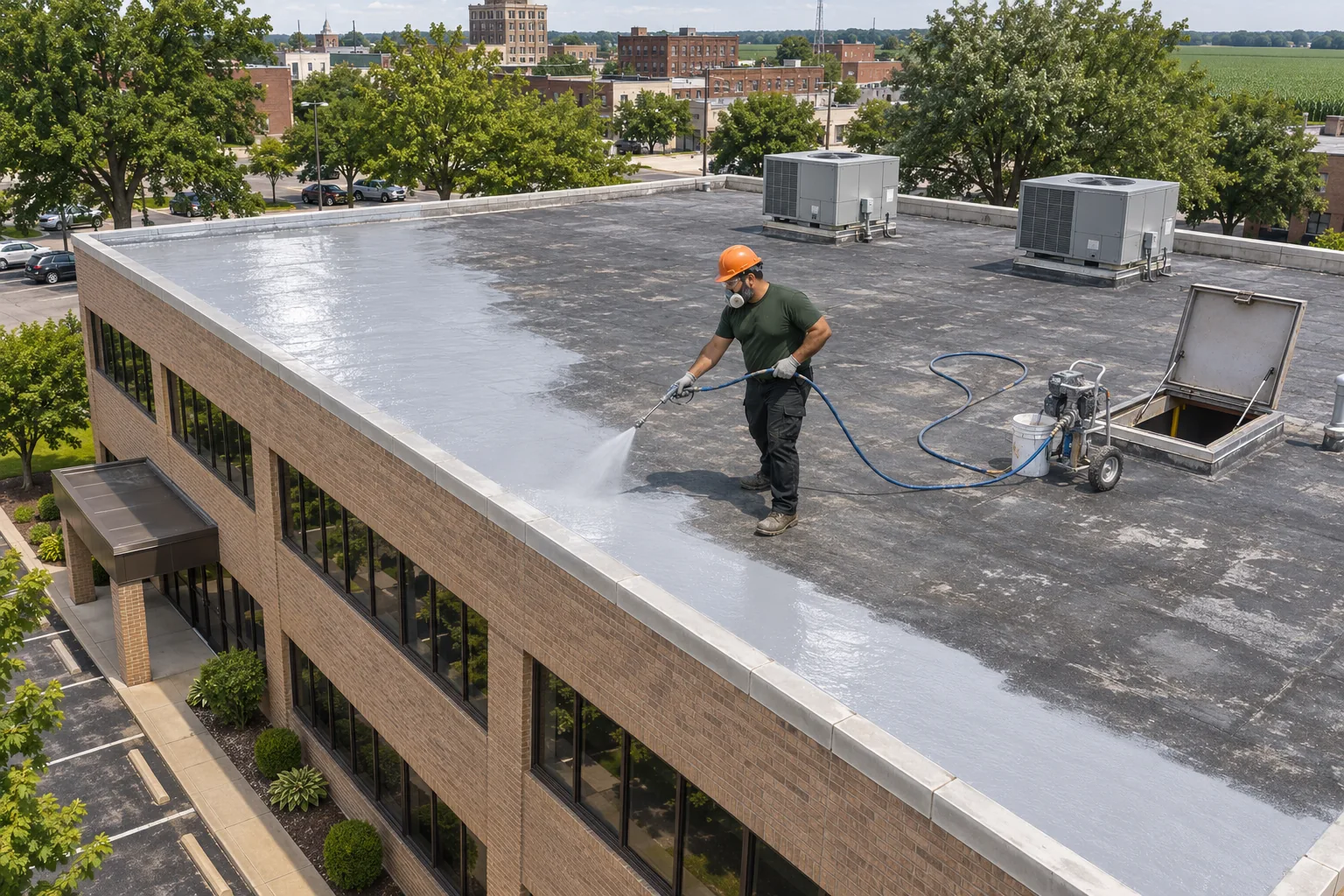
Low-slope steel that holds water near the gutters takes silicone, which stands up to ponding where acrylic would soften.
Silicone coating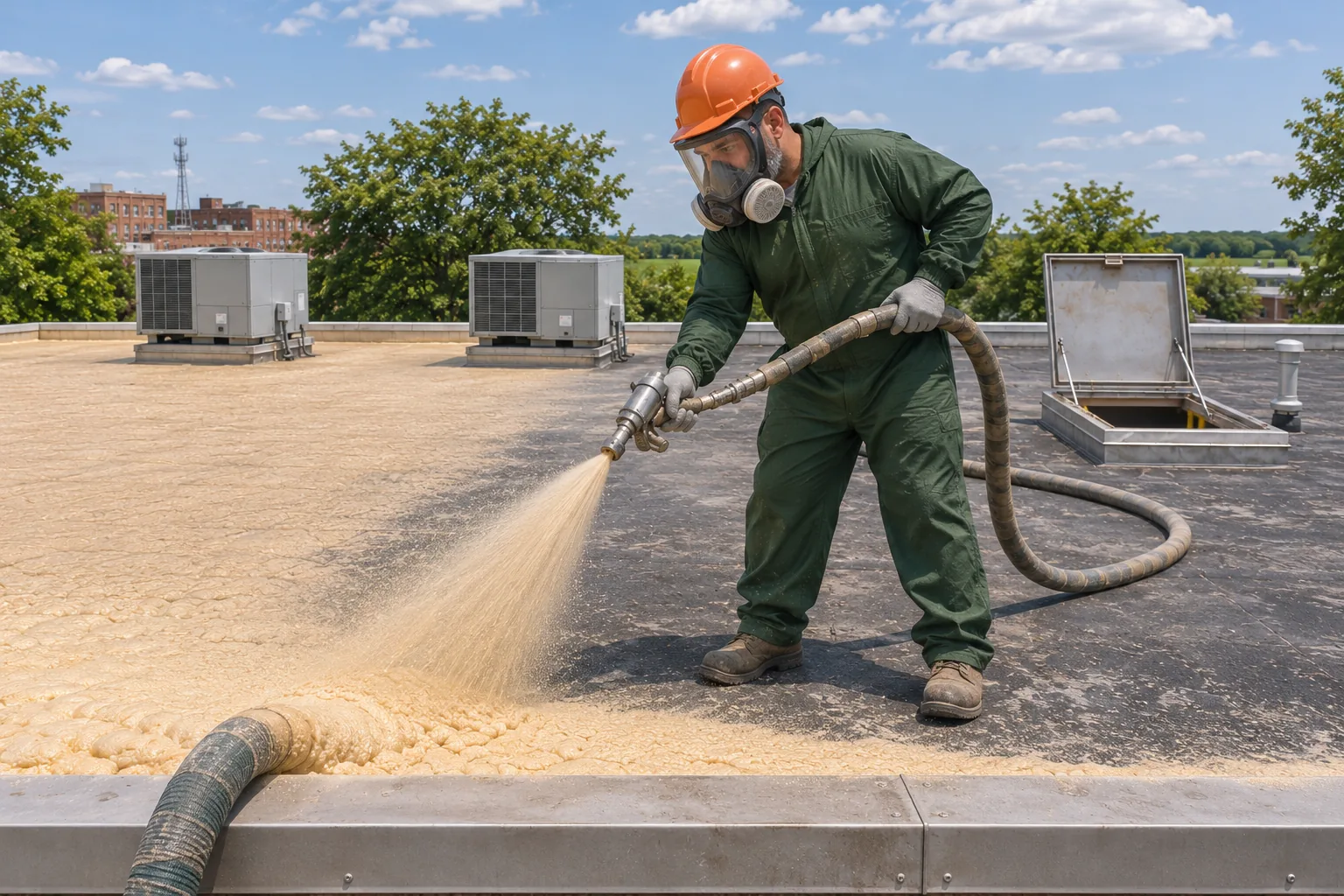
Leaky metal roofs with thin insulation can take spray foam, which covers every screw head and adds insulation in one layer.
Spray foam roofing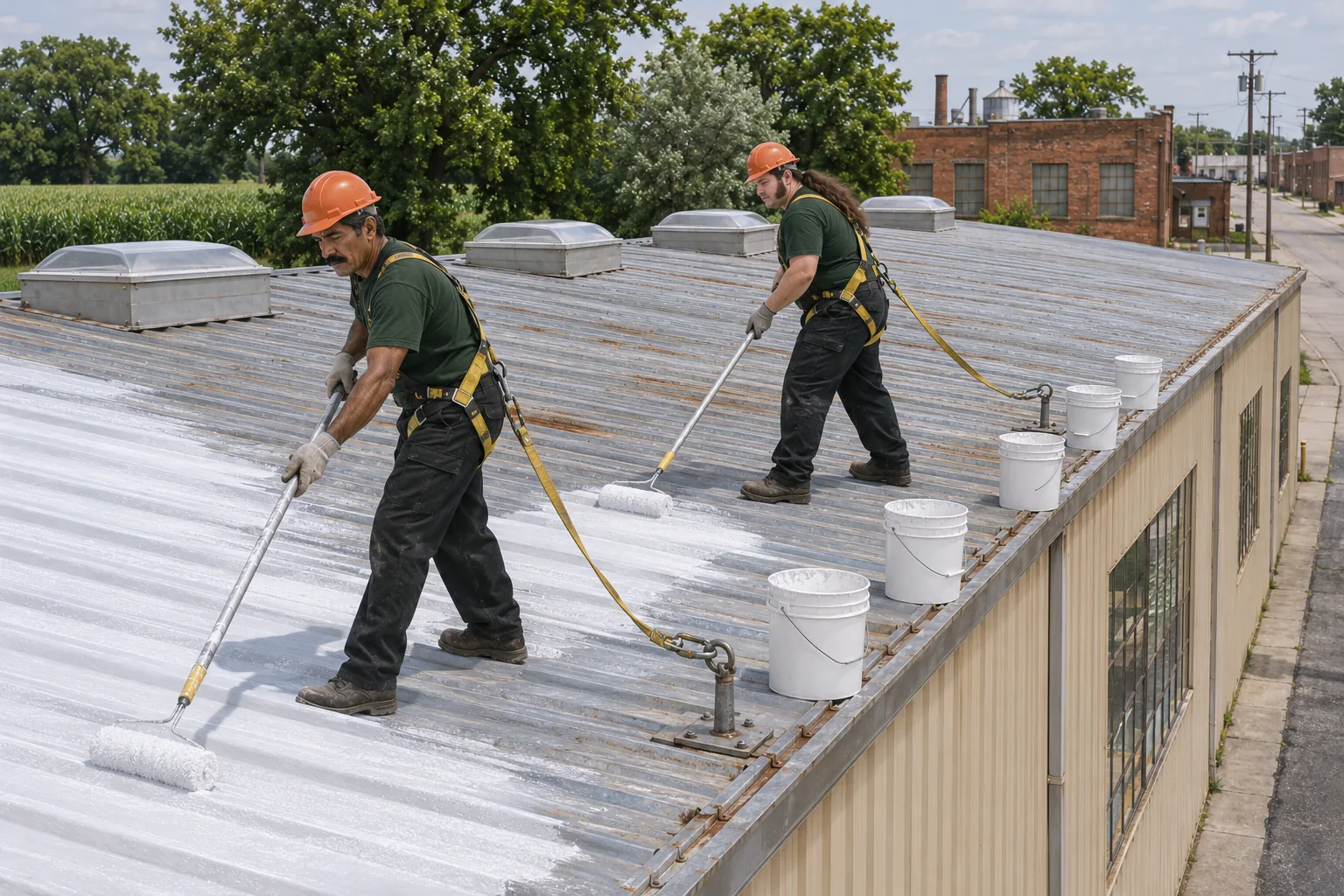
Pitched steel that drains fast and gets recoated on a schedule fits a water-based acrylic finish.
Acrylic coatingAnswers to what owners of steel buildings ask before a coating job.
Inspection comes first. We look for punctures, split seams, cracked panels, and screws knocked loose, then repair or replace those pieces before washing and coating. Shallow dents seldom affect how the coating bonds. If you plan an insurance claim, have the damage documented before any repair work starts.
Yes, because every screw is a possible leak. We tighten or replace loose screws, size up stripped ones, seal each head, and cover side and end laps with fabric or seam sealer. That detail keeps the coating from cracking around screws as the panels move with the seasons.
The roof is pressure-washed, then loose scale is wire-brushed or ground off. Treated areas get a rust-inhibiting primer so the coating bonds to stable steel. Corroded laps, panel ends, and gutters get extra attention, and any panel rusted through is replaced before coating starts.
Usually, yes, since all of the work happens on the roof. We plan around patient entrances, keep pails and hoses clear of walkways, and pick low-odor products near air intakes. Rooftop air handlers sometimes need a short shutdown while we coat beside them, and we set that time with you ahead.
Our published range is about $2.50 to $4.00 per square foot to coat, against about $5 to $8 to replace. A plant's final price follows the roof walk. Big open roofs tend to land lower per foot, while heavy rust, crowded curbs, and work around production shifts push it higher.
Coating type, the thickness applied, the prep underneath, drainage, and foot traffic all play a part. In Muncie, freeze-thaw movement, hail, and water sitting near gutters wear a coating faster. Many products carry 10 to 20 year ratings by thickness, and regular inspections with timely recoats keep the roof protected.
Tell us about the steel, the screws, and where it leaks. You get a ballpark range now and a roof walk when you are ready.