Two-Coat Acrylic Over Primer
Primer on rust, a base coat, and a topcoat in a contrasting color so missed spots are easy to see.
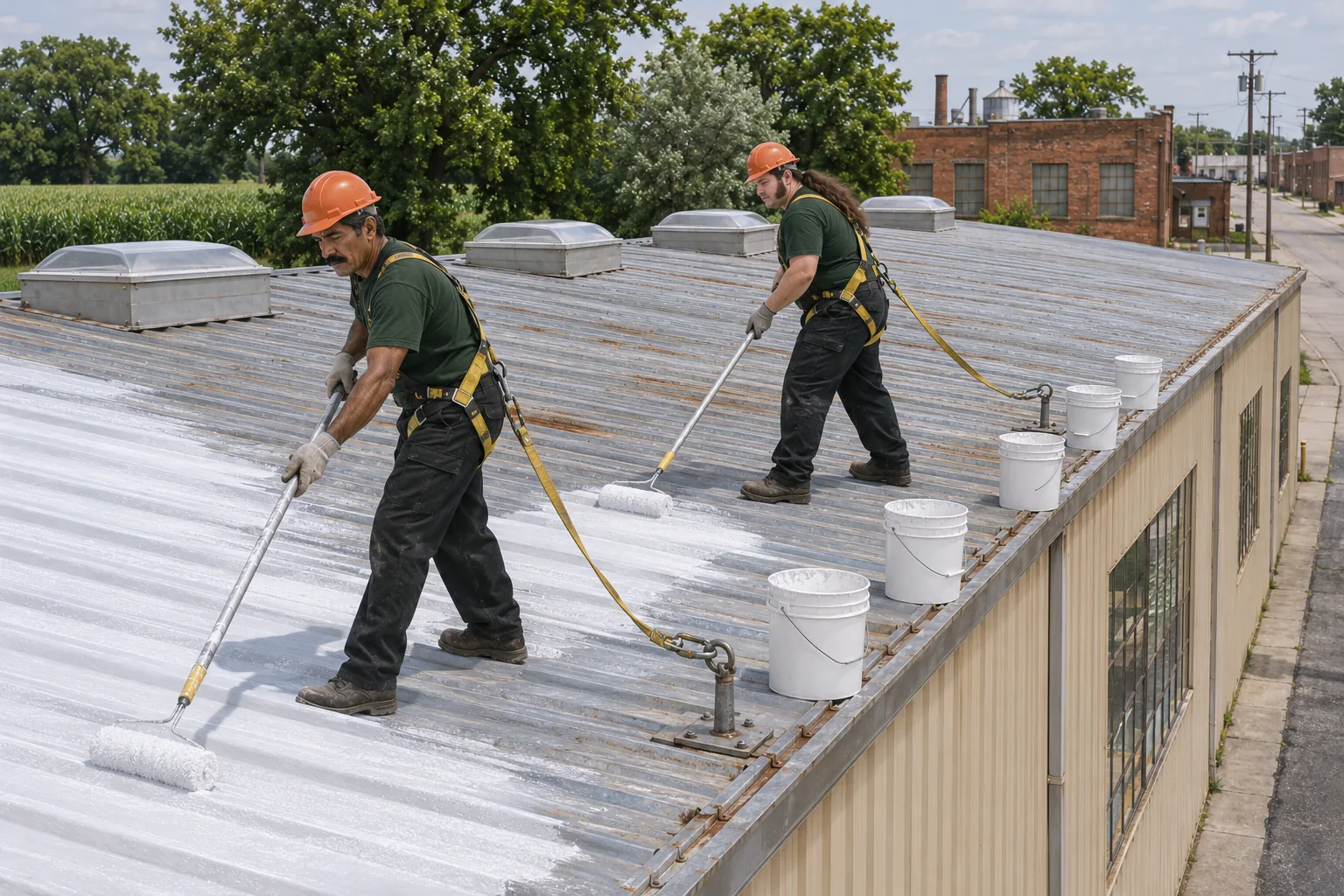
As a Muncie acrylic roof coating contractor, we roll and spray water-based acrylic over sloped metal roofs that shed rain quickly and need a fresh finish.
Muncie acrylic roof coating works best on roofs that drain quickly and can be scheduled for dry, mild weather.
| Check | Good For Acrylic | Pick Another System |
|---|---|---|
| Slope | Pitched metal that sheds water | Flat areas where water stays |
| Drainage | Gutters and outlets clear | Ponds near gutters or valleys |
| Surface | Metal, old acrylic, or primed steel | An existing silicone coating |
| Weather window | Mild, dry days with warm nights | Rain or freezing nights inside the cure time |
| Rust | Surface rust that takes primer | Rust-through holes in the panels |
| Budget | Lower cost per gallon | One thick coat needed over ponding |
Sloped metal roofs show their age in a few predictable ways. Each one has a matching fix during an acrylic job.
White streaks down the siding after rain come from old roof paint breaking down into powder.
The chalk is washed off so acrylic bonds to firm paint and bare steel instead of loose powder.
Leaks high on a sloped roof often start at the ridge cap, where screws and closures loosen first.
Ridge screws are tightened or replaced, closures sealed, and cap laps covered with fabric before coating.
Orange spots across the panels mean the factory finish has worn through in places.
Each spot is brushed and primed, then the acrylic covers primer and paint in one even film.
Shops under dark steel run hot by midafternoon, when sun has been on the panels for hours.
A white acrylic topcoat reflects that sun back off the roof surface.
Acrylic comes in a few builds for metal roofs. The roof's age and drainage pick the build.
Primer on rust, a base coat, and a topcoat in a contrasting color so missed spots are easy to see.
Polyester fabric set in acrylic at every lap and curb adds strength where panels move most.
An existing acrylic finish that still grips is washed and given a fresh topcoat.
A bright white final coat for roofs over warm production or storage space.
On a sloped metal roof, acrylic brings a lot for its cost. Here is what that looks like.
Acrylic recoats with acrylic after a wash, so upkeep stays simple.
White acrylic turns back sun that heats the space under the roof.
Primed rust under the film stays dry and spreads far more slowly.
Per gallon, acrylic costs less than silicone on roofs that drain well.
Chalky, faded steel is ready for a fresh acrylic finish once it is washed and primed. Get a ballpark coating range in seven questions.
Acrylic needs warm, dry weather to cure, so the schedule matters as much as the steps.
We check the paint, screws, ridge, and laps, and confirm water drains off every panel run.
Air and surface temperatures have to clear the maker's minimum, with time to cure before cold nights or rain, so we watch the forecast closely.
Chalk and dirt come off with a pressure wash, and rust spots get primer once the steel is dry.
Screws, closures, and laps get sealant and fabric set in acrylic before the field coats.
Coats go on midday so they set before evening dew, with thickness checked as we go.
When acrylic is the wrong match, one of these usually fits.
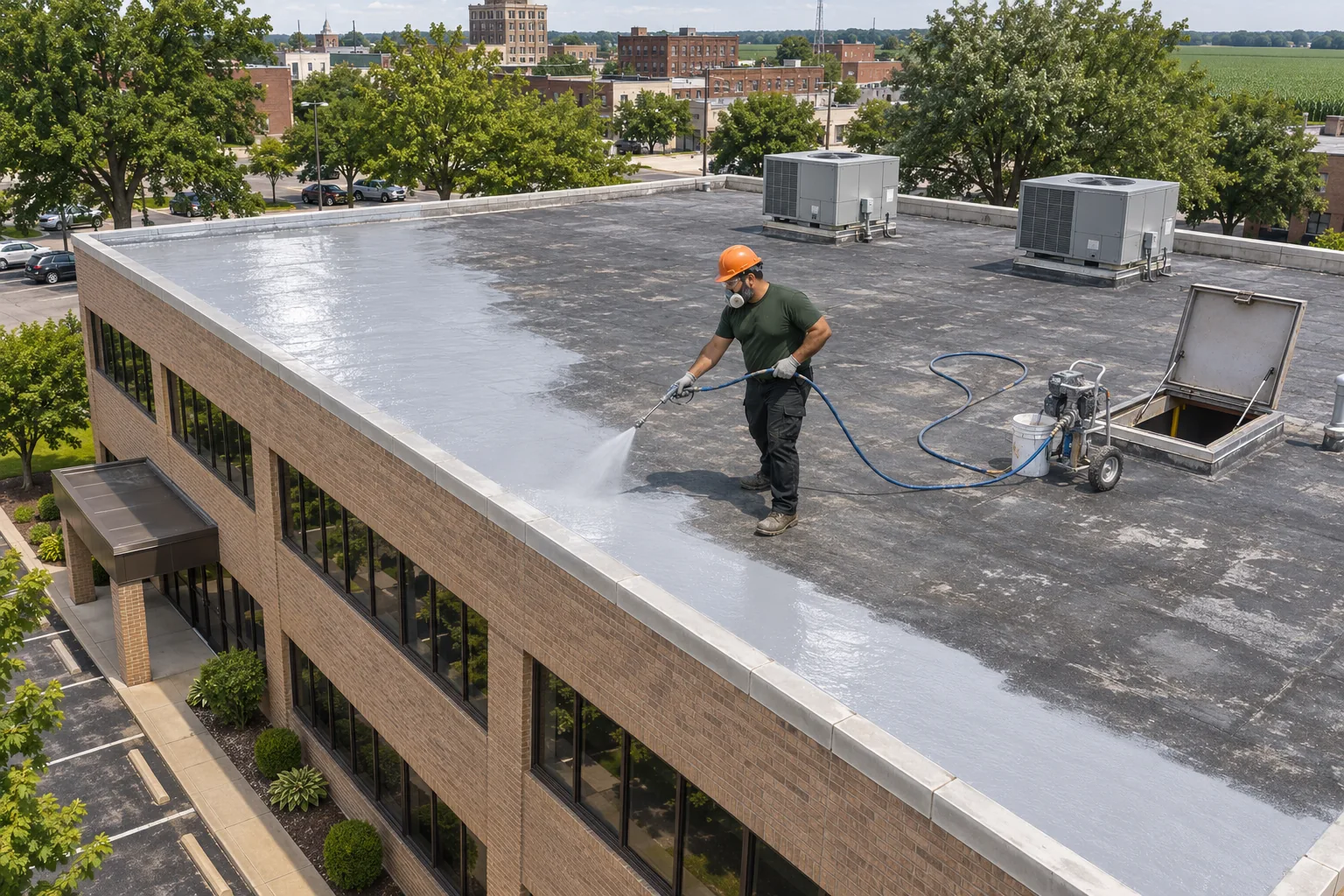
Low spots that hold water after storms call for silicone, which keeps its grip under standing water.
Silicone coating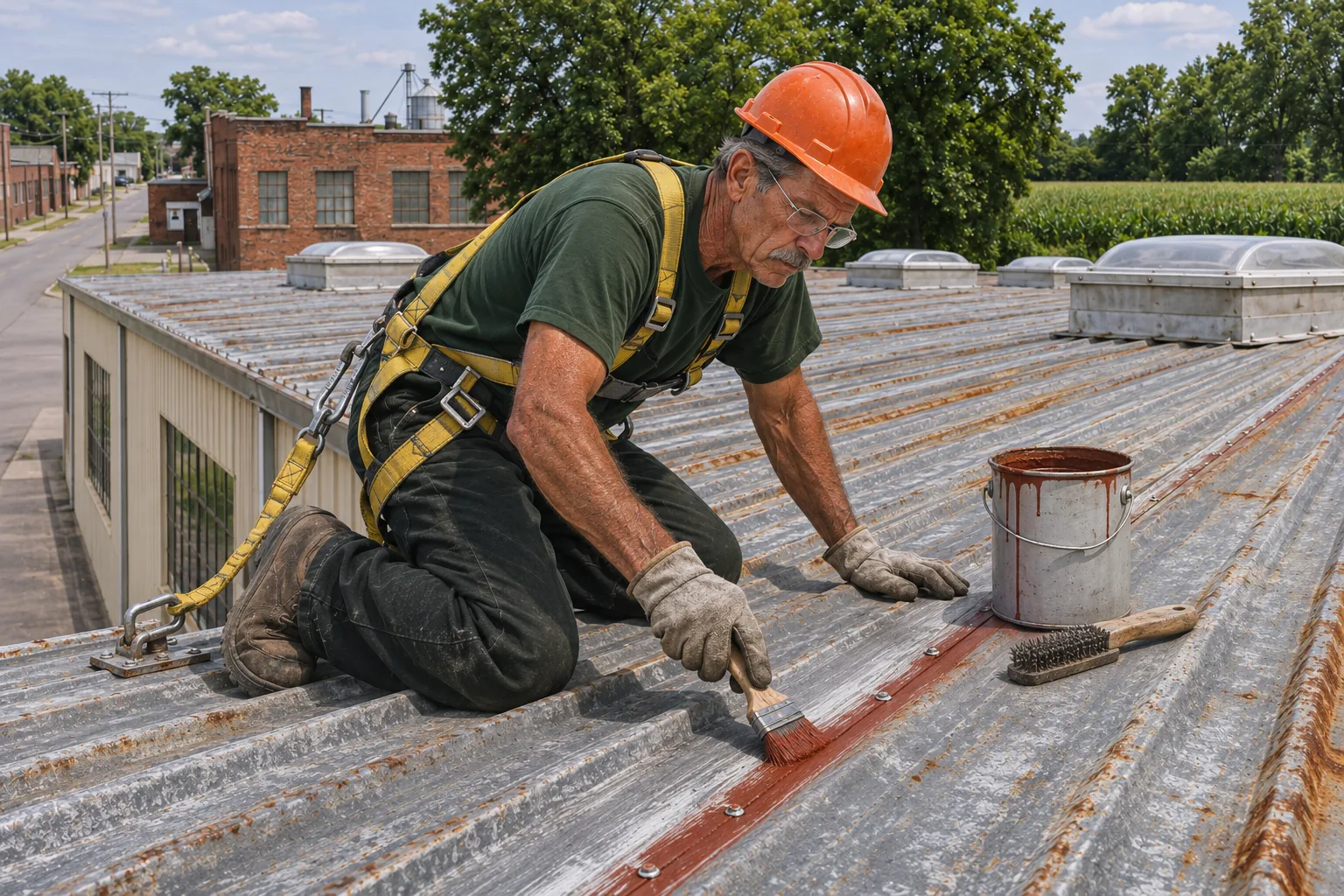
Heavy rust, stripped screws, and hail damage get the full panel prep covered on our commercial metal page.
Commercial metal roof coating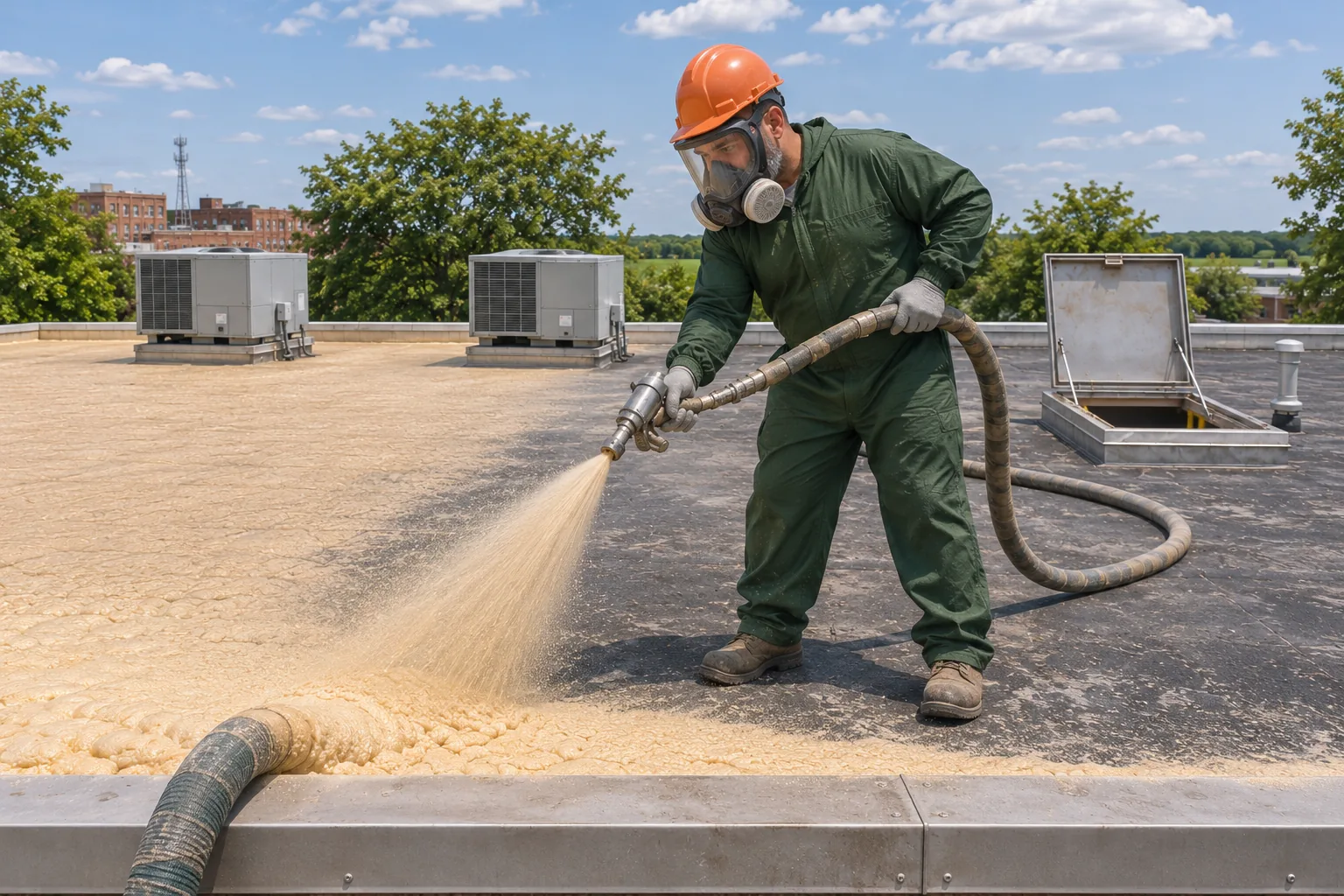
Roofs that need insulation as well as a new surface can take spray foam with a protective topcoat.
Spray foam roofingShort answers on weather, wear, and cost.
Acrylic needs air and roof temperatures above the product minimum, plus enough dry hours to cure before cold or rain. In spring and fall, Muncie afternoons can be warm enough while near-freezing nights and morning dew shorten that window. We book acrylic for mild, dry stretches and apply it midday.
Acrylic struggles under standing water, so it is a weaker pick for roofs that pond. It needs warm, dry weather to cure and can wash off if rain arrives early. It often takes more coats than silicone to reach the same thickness. On sloped metal roofs that drain well, it stays a practical choice.
Its life follows dry film thickness, prep, drainage, and how much sun and freeze-thaw the roof takes. On a well-drained metal roof in Muncie, an acrylic system is often expected to go around 10 years or more before a recoat. Ponding, heavy foot traffic, and thin coats cut that short.
Acrylic sits within our published range of about $2.50 to $4.00 per square foot, with replacement around $5 to $8 for comparison. The final price comes after a roof walk. Rust repair, screw sealing, the number of coats, and how we reach the roof all move it within that range.
Usually no. Acrylic bonds poorly to silicone, so a roof already coated in silicone gets silicone again. If you are unsure what is on your roof now, a small adhesion test during the inspection settles it before any material is ordered.
Most acrylic systems go on as a base coat and a topcoat, with extra material worked into fabric at laps and curbs. Worn or rough panels soak up more, so we check thickness as we go and add material where readings run thin.
Send the roof size and slope for a ballpark range, then call to set up a roof walk during a dry stretch.